Engineering the Agentic Loop: Antigravity, Gemini & MCPs
🚫 Text-to-speech is not supported in your browser. Please try a modern browser like Chrome, Firefox, or Safari.
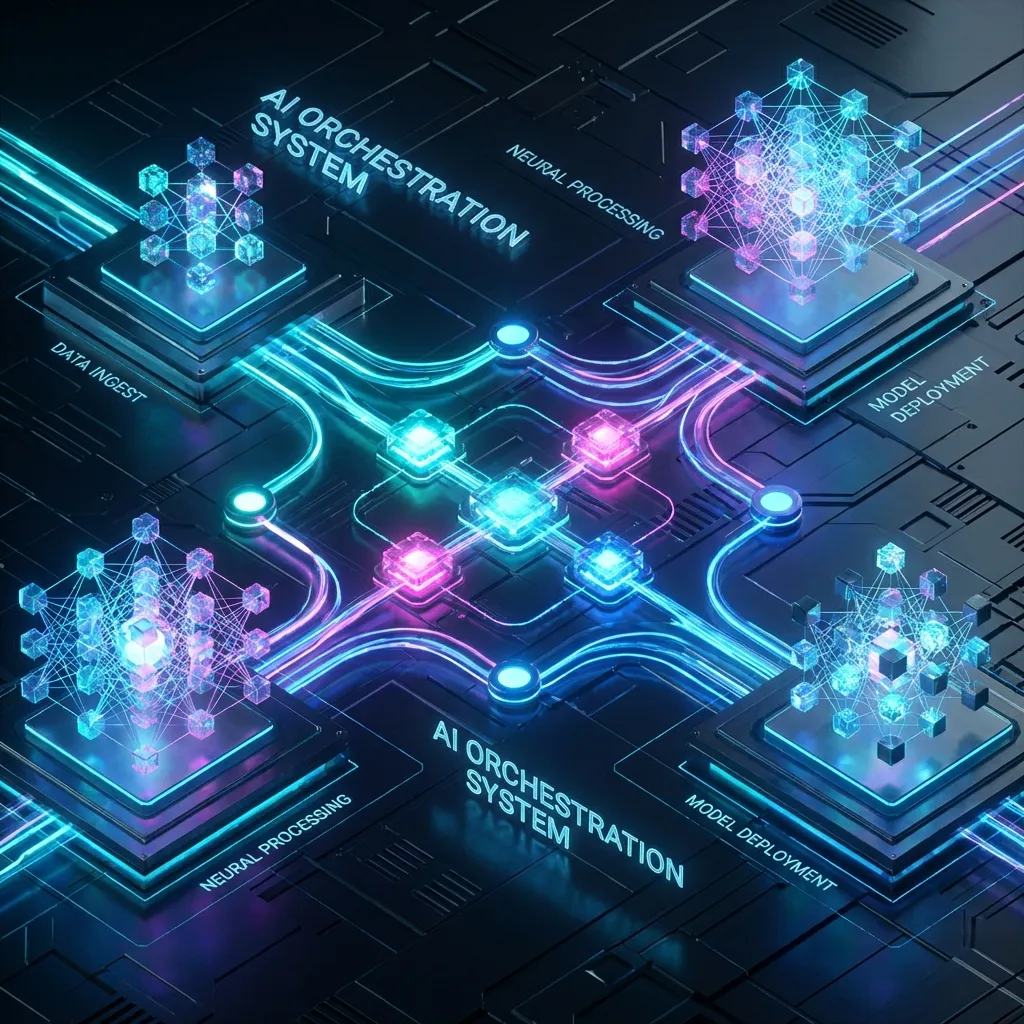
The transition from “AI as a Chatbot” to “AI as an Engineering Agent” happens when you close the loop between reasoning and execution. In this technical deep dive, I’ll explain how I architected an autonomous engineering system using Antigravity, Gemini CLI, and a specialized stack of Model Context Protocol (MCP) servers.
🛸 The Antigravity Orchestration Engine
At the heart of my workflow is Antigravity—an autonomous agent designed to navigate complex codebases. Unlike standard LLMs, Antigravity operates as a “Pilot” that connects Gemini’s 1.5 Pro/Flash reasoning models directly to my local filesystem and terminal.
The connection is established via a suite of automation tools in tools/ that standardize our interactions:
session:init: An AI-driven environment audit that syncs Git state, verifies Node/NPM versions, and updates dependencies.git:start: A programmatic bridge that initializes features, creates conventional branches, and uses the GitHub CLI to open Draft PRs automatically.git:ship: The final delivery sequence—Antigravity runs a full validation suite (Lighthouse, Vitest, Playwright), pushes the code, and initiates an auto-merge via GitHub.
🔌 Scaling Intelligence with MCP
The Model Context Protocol (MCP) is the “USB-C for AI.” It allows Antigravity to plug into specialized intelligence silos. My current “Agentic Stack” includes:
- TestSprite MCP: This is my autonomous QA department. It analyzes my code, generates a Standardized PRD, and writes/executes its own end-to-end tests without human intervention.
- Astro Docs MCP: Provides Antigravity with real-time, RAG-enhanced access to the latest Astro documentation, preventing “hallucinations” on new framework features.
- GitHub MCP: Deep integration with the repository lifecycle—managing issues, PR comments, and CI/CD status checks.
- Chrome DevTools MCP: Allows the agent to “see” into the browser during E2E testing, inspecting the DOM and console logs to debug hydration issues in real-time.
- ESLint & CSS MCPs: Programmatic code quality gates that ensure every line Antigravity writes adheres to the project’s strict styling and logic rules.
🧠 The Hybrid AI Architecture
For the blog’s frontend features (like Summarization and Translation), I engineered a Hybrid AI Strategy designed for resilience:
graph TD
    A[User Request] --> B{Browser Support?}
    B -- Yes --> C[Gemini Nano / Chrome AI]
    B -- No --> D[Gemini 1.5 Flash Cloud]
    C -- Timeout/Fail --> D
    D --> E[Astro DB Cache Check]
    E -- Miss --> F[Cloud Generation]
    F --> G[Store in AICache]
    G --> H[Return Result]
E -- Hit --> H- Local Processing: We prioritize Gemini Nano (Chrome’s on-device model) for data privacy and zero-latency.
- Resilient Fallback: If the experimental Chrome APIs fail (e.g., model download timeouts), the system transparently flips to a server-side endpoint powered by
gemini-1.5-flash. - Intelligent Caching: We implemented an
AICachetable in Astro DB. By hashing the content, we ensure that we never pay for the same summary twice, significantly reducing API overhead and improving user response times.
🛠️ Technical Resilience in Agentic Workflows
Building with autonomous agents requires “Defensive Engineering.” Every tool Antigravity uses is wrapped in robust error handling. For instance, our GitHub Automation handles merge conflicts via the AI’s own reasoning, while our Grammar Checker utility (tools/grammar-checker.ts) automatically cleans up residual metadata to keep the history clean.
🎯 Conclusion: The Future of DevEx
By combining Gemini’s reasoning with the tool-using capabilities of Antigravity and the extensibility of MCP, I’ve moved from “coding” to “orchestrating.” This setup allows me to maintain a 100 Lighthouse score and 80%+ test coverage while focusing 100% on architecture rather than boilerplate.
The era of the “Solo Dev” is ending; the era of the Orchestrator has begun.